
Casey Dienel – People Can Change & The Butcher Is My Friend
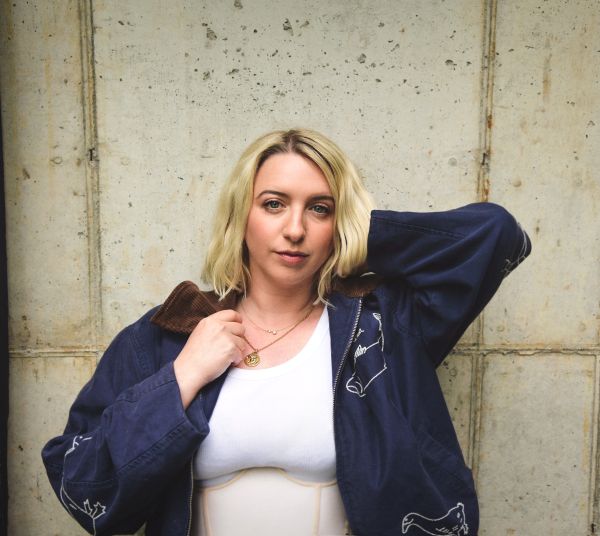
Today Massachusetts-based songwriter, producer, and multi-instrumentalist Casey Dienel shares two new singles from My Heart is an Outlaw, Dienel’s seventh album and first-ever studio-recorded release, out October 17, 2025 via Jealous Butcher Records.
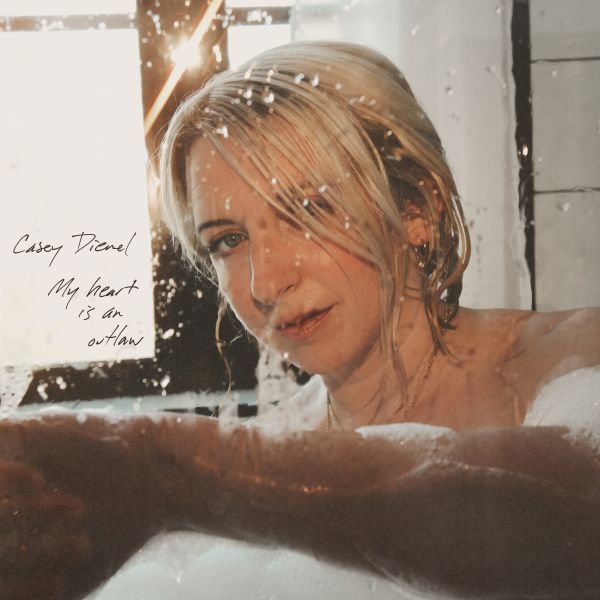
The smoldering ballad “People Can Change” and “The Butcher is My Friend,” a love song for those who’ve mistaken devotion for survival.
According to Dienel: “I give you two sides of the same blade. One song is about the power of saying no; the other, about what happens when you allow yourself to say yes. ‘People Can Change’ is me at my most elemental, when I’m tapped into my gut. ‘The Butcher is My Friend’ is what comes just before: the intoxicating high of new love, laced with the creeping sense that you might have abandoned yourself to chase it. Both songs ask what it means to stay open and how much you can reasonably ask of another person.”
Further adding: “The hiatus I took made these songs possible. For the first two years after ‘quitting,’ I reverted to being a fan again. I went back and listened to my favorite records. I returned to songwriting the way I did as a child, just me and the piano. There’s this childlike place where both of these songs were written from—it’s the sound of someone with nothing to lose. Filter cap off.”
“People Can Change” is the candle in the bedroom that becomes an all-consuming blaze. From the opening piano lines, Dienel peacefully saunters away from the engulfed home in slo-mo and unfurls a picnic blanket in front of the fire. Gather around and sit. They’ve got some truths to feed you about autonomous selfhood, personal power, and the lightness that comes when you say no–and you are about to eat. Partially sung with a plaintive, almost-talking-but-not-quite nonchalance before escalating into full-throated, rich belting, Dienel’s deft vocal dynamics are supported by swelling horn arrangements by Adam Schatz (Landlady) and a soaring Greek chorus including artists Starr Busby, Jachary, and Nina Moffitt. Strong in its restraint, jubilant in its emergence, “People Can Change” mirrors the hesitance and complexity of reclamation through release: “Just because I don’t want to mother you doesn’t mean I never loved you”, they explain sweetly; sternly.
Dienel shares:
“What can I say? Think twice before asking for my opinion. I am, by definition, not chill. There’s a lot of situational comedy in this song, which only happens when you pop the filter off. Is it too much to ask for a moment, a big sky, or an ocean? You can’t get a person to become someone else. But those contradictions in people are what I find so lovable in the first place. Everyone I fuck with is acquired taste. I wear my ‘too muchness’ like a badge of honor.
I wrote this song during lockdown, and was programming everything in the original version. It was when I leaned back and realized the programming was made to feel like live instrumentation that I began to consider going back to a studio with a full band.”
“The Butcher is My Friend” is a fever dream in three acts: a failed garden, a romantic getaway, a fist clenched around a feeling. What begins with cream-colored petals and a hand buried in the dirt quickly escalates into something darker. Over an insistent beat and guitar, Dienel’s vocal performance pulls between seduction and self-protection, alternating between desire and wariness: “This heart / won’t trust it.” The arrangement tightens and loosens like a muscle around memory, punctuated by a chorus that sounds both fatalistic and free. Take note of what blooms in inhospitable soil; jasmine lingering in your pocket. Produced by Adam Schatz (Landlady, Japanese Breakfast) with contributions from Max Jaffe, meg duffy (Hand Habits), and Spencer Zahn, the song balances tension with tenderness, building a portrait of queer love that’s messy, open-hearted, and defiantly unresolved.
According to Dienel:
“New love is a leap of faith. Here is a song about how sometimes we stand in our own way. The butcher within us talks like it knows the end already. Sometimes I find it easier to trust nature more than my own gut.
This song started on a trip to Martinique. We were on this dock in a tiny village watching pelicans do death drops into the water at sunset. It was so beautiful — the rhum agricole, the sky, the company. You’re all sexed up and lovesick. Here I was in paradise, wondering how much longer I could go on feeling so good. Eventually, you’ve got to get off the ride, right? Maybe that’s the butcher within, sharpening his knife. Maybe it’s your gut, reminding you to protect your heart.
I’d had that line in my head for ages, ‘the butcher is my friend’ not connected to any melody. I wanted to contrast this macho, big American rock sound with some of the most vulnerable imagery on the album. Adam and I went widescreen with it—sax solo, big drums, and my vocals doubled up real thick. So much of this album is about taking these big swings. Make your ‘Live at Wembley’ album. What do you have to lose in the end?”
These two singles follow the September release of “Seventeen,” a song rooted in memories and revelations that sprang from an actual stop in Galway that Dienel made on a solo trip. The opening synths of “Seventeen” are a synaptic constellation as futuristic and expansive as it is reflective. It reaches for the stars that may still be in our eyes, while Dienel’s expressively resonant voice and free spirit takes us on a filmic tour of the psyche. Four-on-the-floor drums anchor soaring strings and melodic lines that braid experience with expectation, reaching for ecstasy and oblivion. Paste praised the song effusively on its release, naming it one of their Best New Songs.
The album’s August announcement was accompanied by the release of lead single “Your Girl’s Upstairs” which came with a video directed by Alex Basco-Koch featuring behind the scenes footage of the album recording. “Your Girl’s Upstairs” is a roadhouse reverie built on reverb, contemplative bravado, and the instantly recognizable guitar of meg duffy (Hand Habits); Dienel’s sonic daguerreotype reckons with autonomy, emotional labor, and the illusions we drag into intimacy. “The whole point of my queerness is to live within an alterity, to invent my own future on my own terms,” they explain. With the staunchness and grace of a boxer, lines like “She played house, played dead, played anything to keep your head from crying” externalize the internal battle between desire, clarity, and contradiction. “Your Girl’s Upstairs” is a gentle growl; the slice and the salve, which caught the attention of The New York Times, Pitchfork, Stereogum, Brooklyn Vegan, The Needle Drop, and Paste among others upon its release.
Dienel plans to celebrate the album’s release with an intimate live performance in Los Angeles to take place December 13th at Scribble.
#casey_dienel